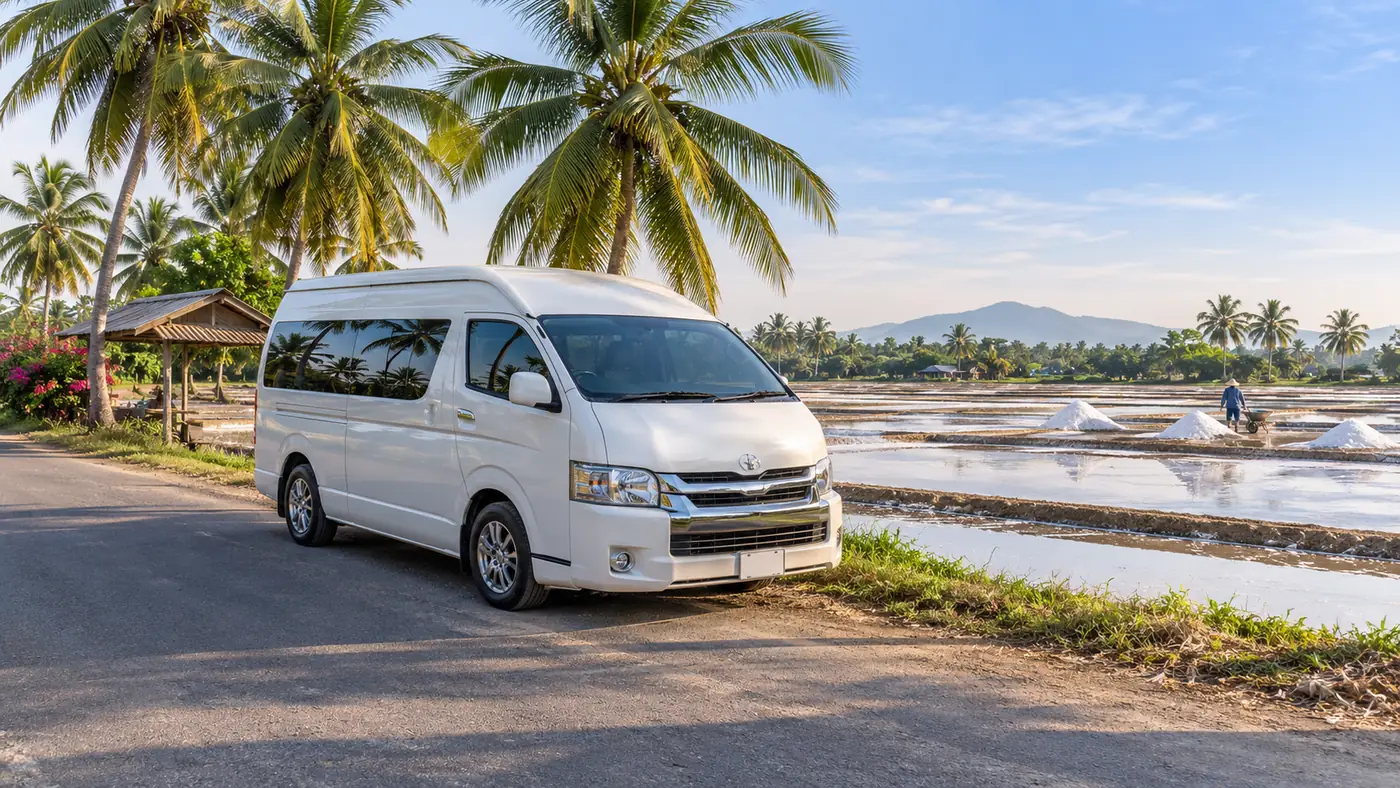
Booking choice: The small-group tour, from $24 per person. Check dates Tour details
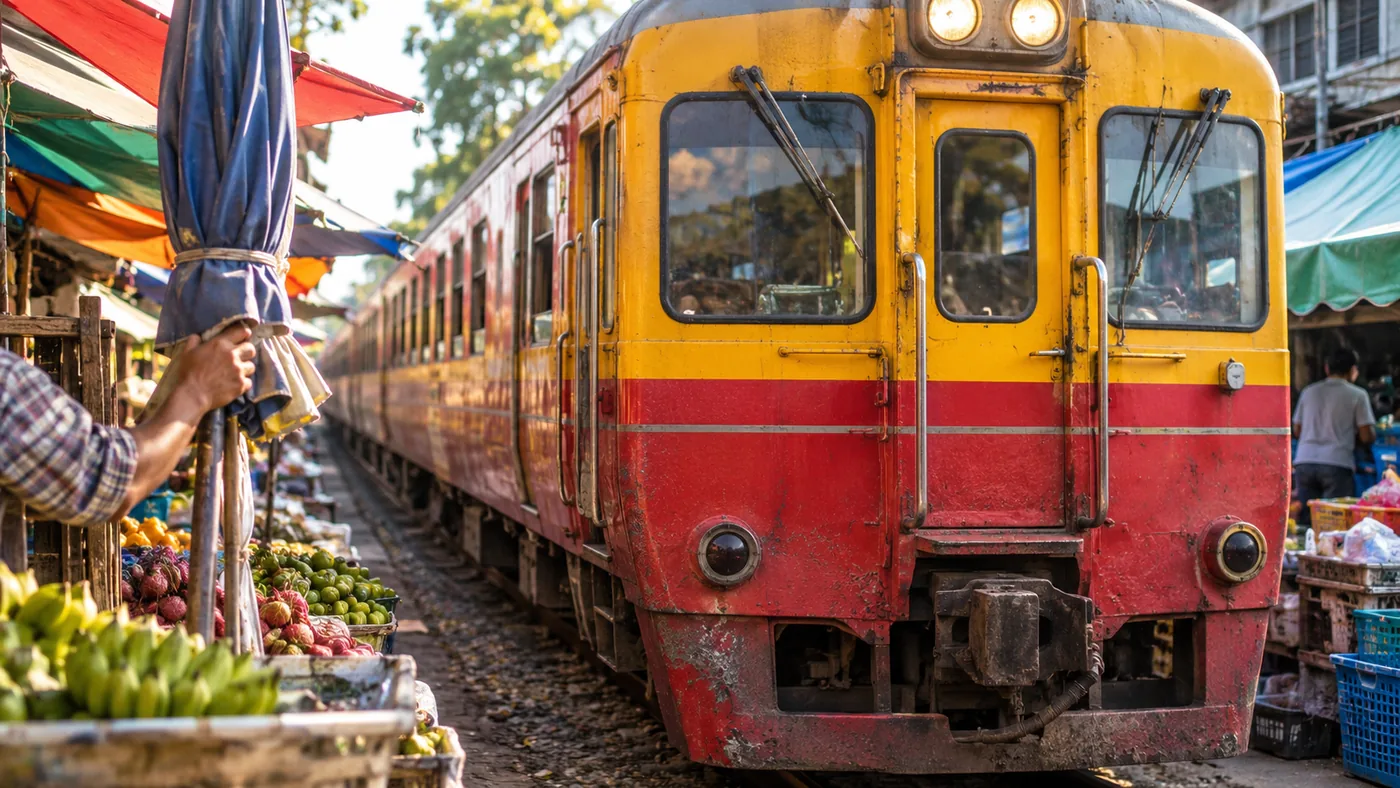
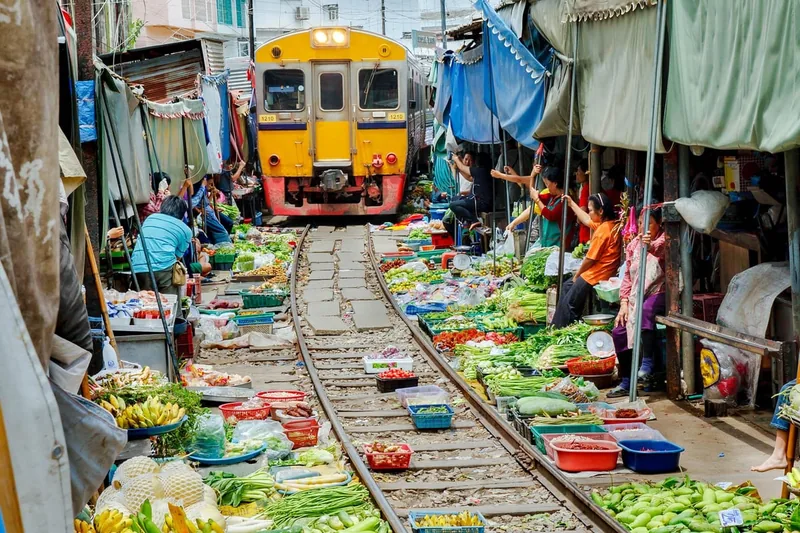
Maeklong Railway Market is a working market first. It is one of Thailand's largest fresh seafood markets, Wikipedia says, built along the track at Mae Klong station, and the vendors pull back their awnings and stalls each time a train comes through. Eight times a day, they make room. The rest of the time it is fish, fruit, curry pastes and shoppers.
That makes for a few simple rules. Know when the train is due, stand where the vendors tell you, keep small notes in your pocket and dress for heat. If your tour also stops at Wat Bang Kung or the Grand Palace, dress for the temple too.
The quick answer
Stand behind the line of the stalls, not on the rails, and move when the warning bell rings. The trains arrive at 08:30, 11:10, 14:30 and 17:40 and leave at 06:20, 09:00, 11:30 and 15:30, per the State Railway of Thailand. Bring cash, since most vendors add 5% for cards. Wear comfortable shoes and a hat, and cover shoulders and knees for temple stops.
Where should you stand when the train comes through?
Behind the front edge of the stalls, with your feet well off the rails, in a spot where a vendor is happy to have you. Pick it a few minutes before the train, not as it arrives.
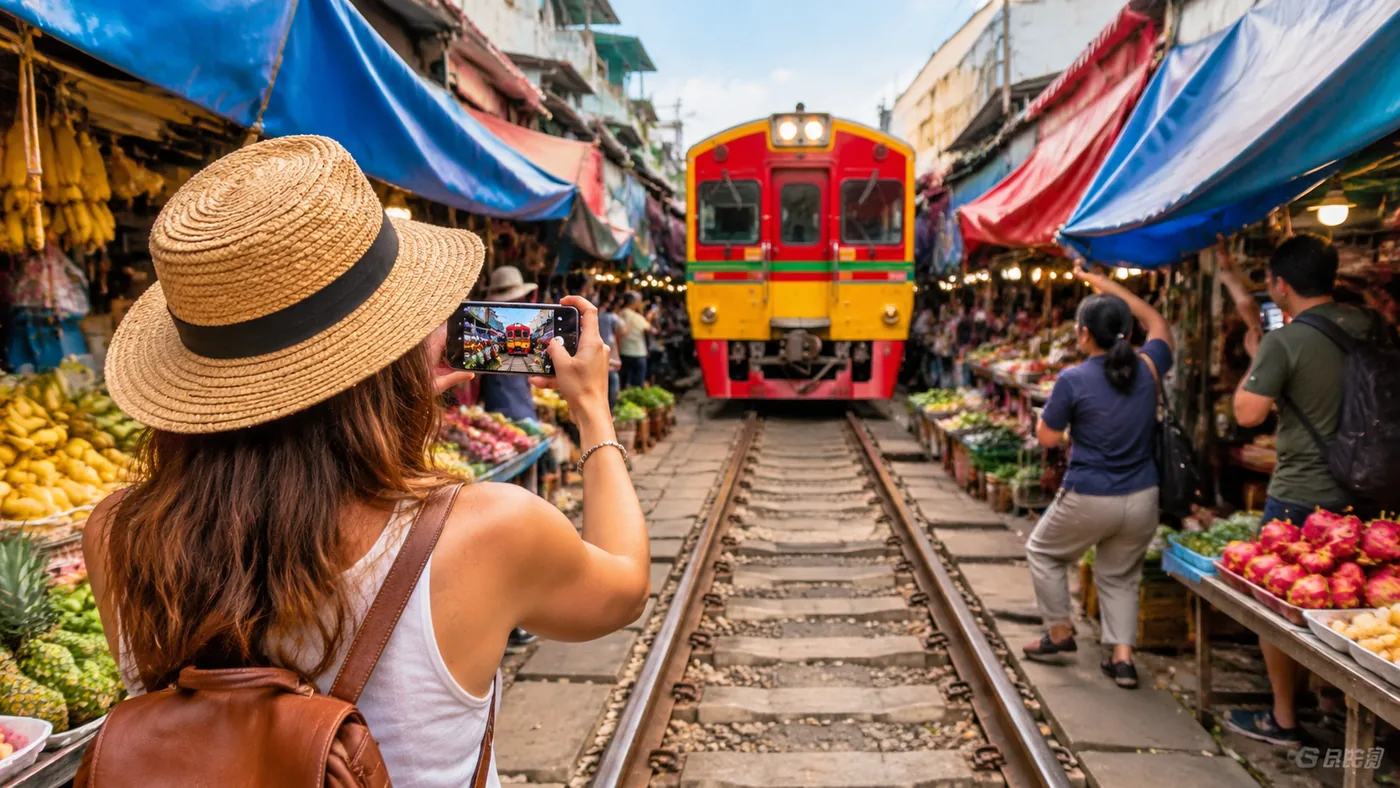
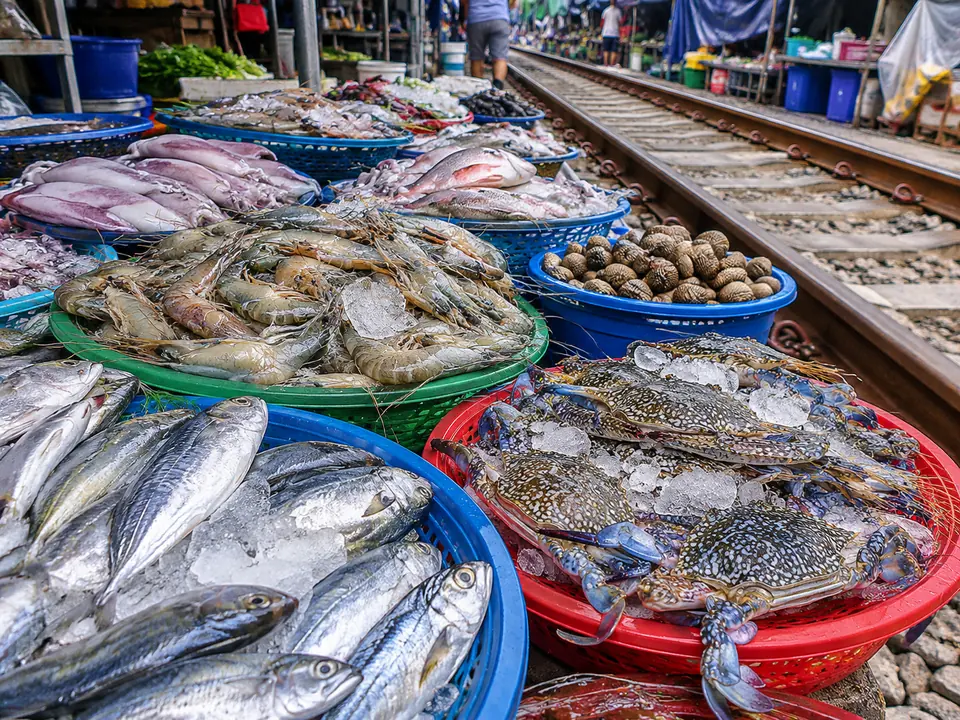
The track runs right down the middle of the market lane, with stalls on both sides. When the train comes, the awnings fold up, the produce baskets slide back and there is room for a person between the stall and the carriage, but not much. The listing for the train market experience puts the train only centimeters from the goods. Believe it.
- Near the station end the train is about to stop or has just started, so it is at its slowest. It is also the most crowded spot.
- Further along the lane the crowd thins, and you get the long view of the awnings closing ahead of the train.
- Behind a stall is the safest place of all. Ask first, and buy something; it is their shop.
A guide helps more than you might think here. On the small-group tour the guide knows where to put a group of 12 without blocking a vendor.
Is Maeklong Railway Market safe when the bell rings?
Yes, if you do what the vendors do. The warning bell means a train is a few minutes away: step off the track, stay behind the stalls and keep bags, elbows and selfie sticks in.
The private car listing puts it simply: move fast when the warning bell goes off, because the train is coming in a few minutes. The line has no signals, Wikipedia notes, and it is one of the slowest railways in Thailand, about 30 km/h on average along the whole route. Slow is not the same as stopping for you, so treat it like any train.
- Keep small children by the hand and behind you.
- Do not stand on the rails for a photo, even when the train looks far away.
- Stay put until the last carriage has passed and the vendors start reopening.
- If you are unsteady on your feet, watch from a stall or the station area. Most tours list people with mobility impairments as not suitable, and the lanes are tight.
Want someone to show you where to stand? The small-group tour keeps it to 12 guests.
Check dates for the small-group tourHow do you get the best photos of the train?
Be in place five minutes early, shoot video rather than stills, and stay for the reopening. If you can, catch an arrival and the departure that follows it: 11:10 in and 11:30 out is the tightest pair.
The timetable gives you three good doubles. The 08:30 arrival is followed by the 09:00 departure, the 11:10 by the 11:30, and the 14:30 by the 15:30. Watch the first one, learn the spot, and shoot the second.
- Video beats photos. The awnings closing ahead of the train is the shot. A burst of stills misses it.
- Turn around. The best moment is often behind the train, as the stalls roll back out over the rails.
- Frame the awnings, not just the train. The market's Thai name, Talat Rom Hup, means the umbrella pulldown market.
- Skip the flash and the drone. Vendors are working, and the lane is narrow.
On a ride-in tour you also get the window view, the stalls sliding past at arm's length. Our train times guide has the full timetable with train numbers.
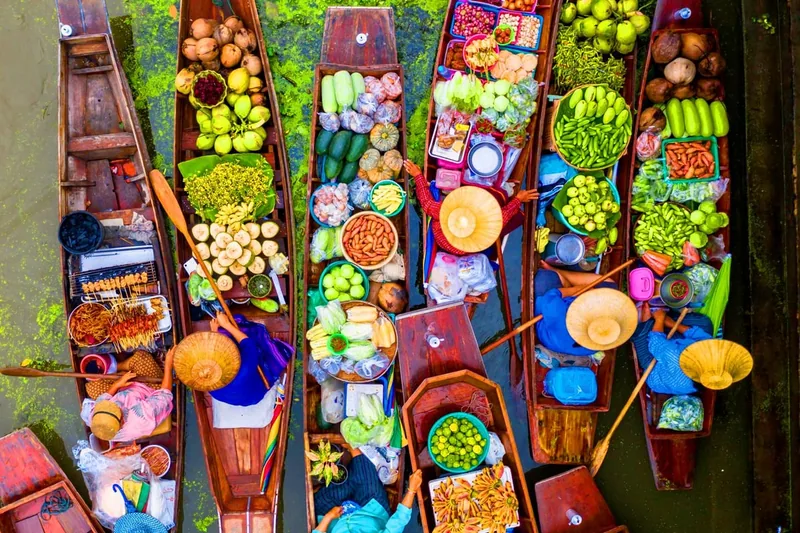
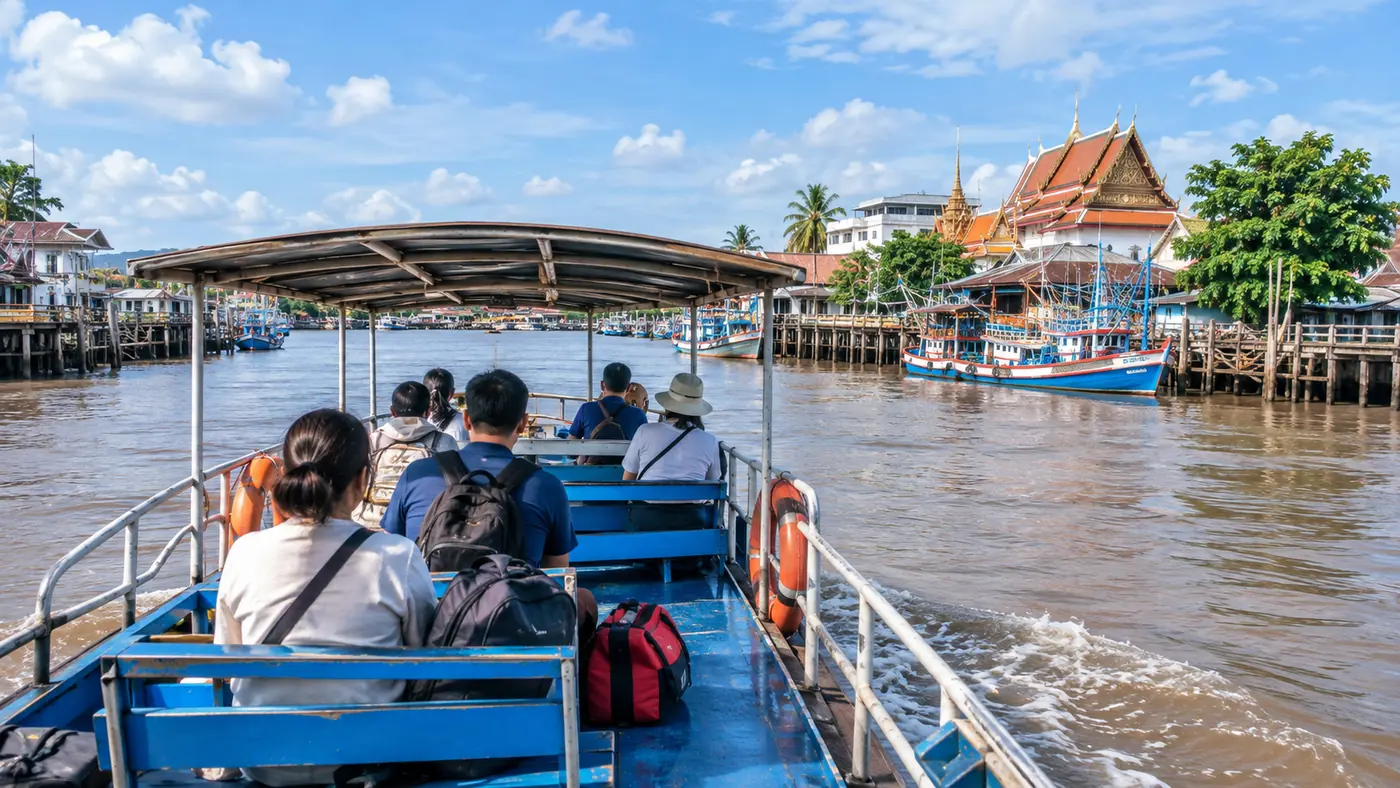
Ride the local train in, then watch it from the stalls: about an hour at the market, then a longtail to Damnoen Saduak.
Explore the train market experience Tour detailsShould you bring cash to Maeklong Railway Market?
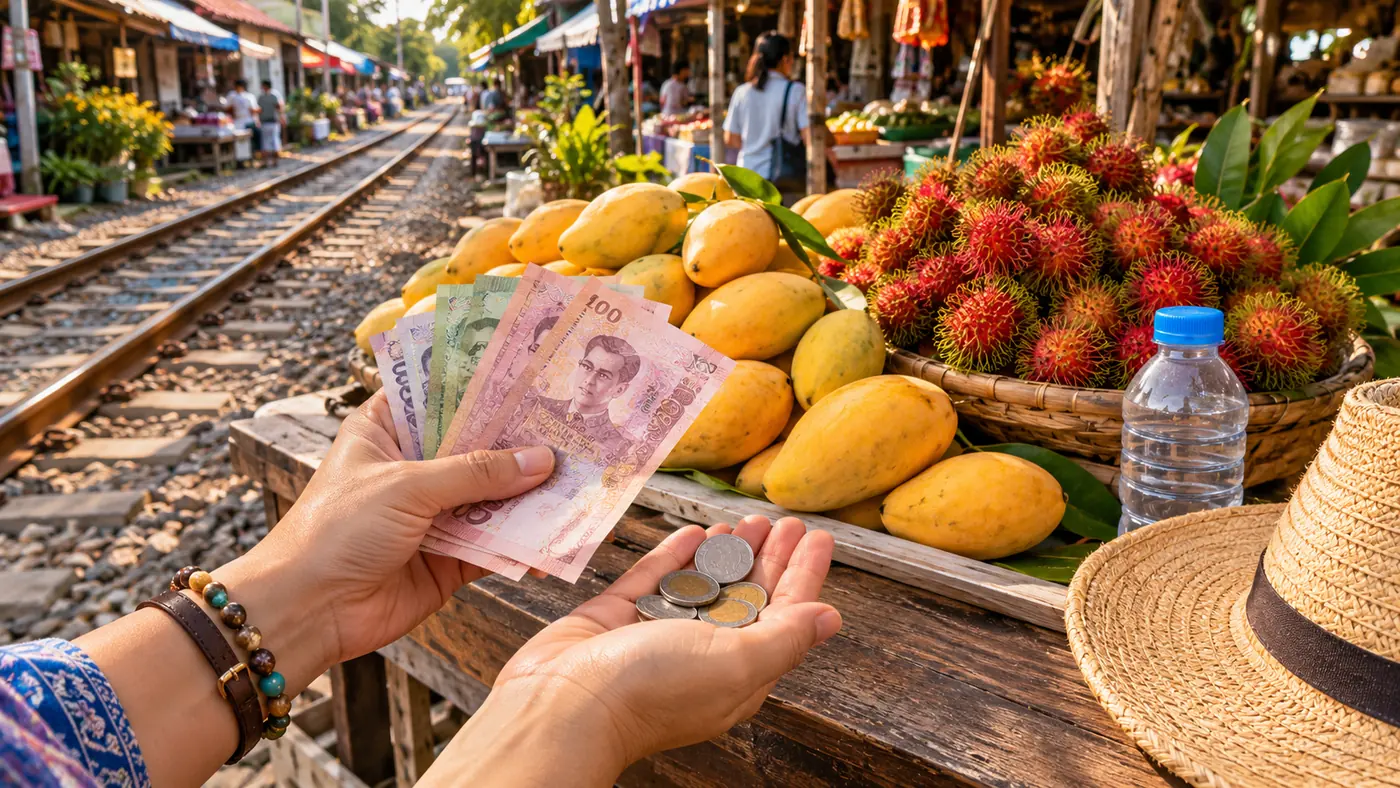
Yes. Bring small baht notes. One tour operator notes that most vendors add 5% for card payments.
Entry is free, so the money is for food, fruit and souvenirs, plus the floating market afterwards. Several of our tour listings put cash on the list of things to bring, and the private tour operator spells out the 5% card fee.
Keep it simple: a mix of small notes and coins in a front pocket, the rest of your money elsewhere. Snack prices at a fresh market are low, and a vendor with a 1,000-baht note to break at 08:30 will not thank you.
What should you wear to Maeklong Railway Market?
Comfortable closed shoes, light clothes, a hat and sunscreen. Add a cover-up for shoulders and knees if your tour visits a temple.
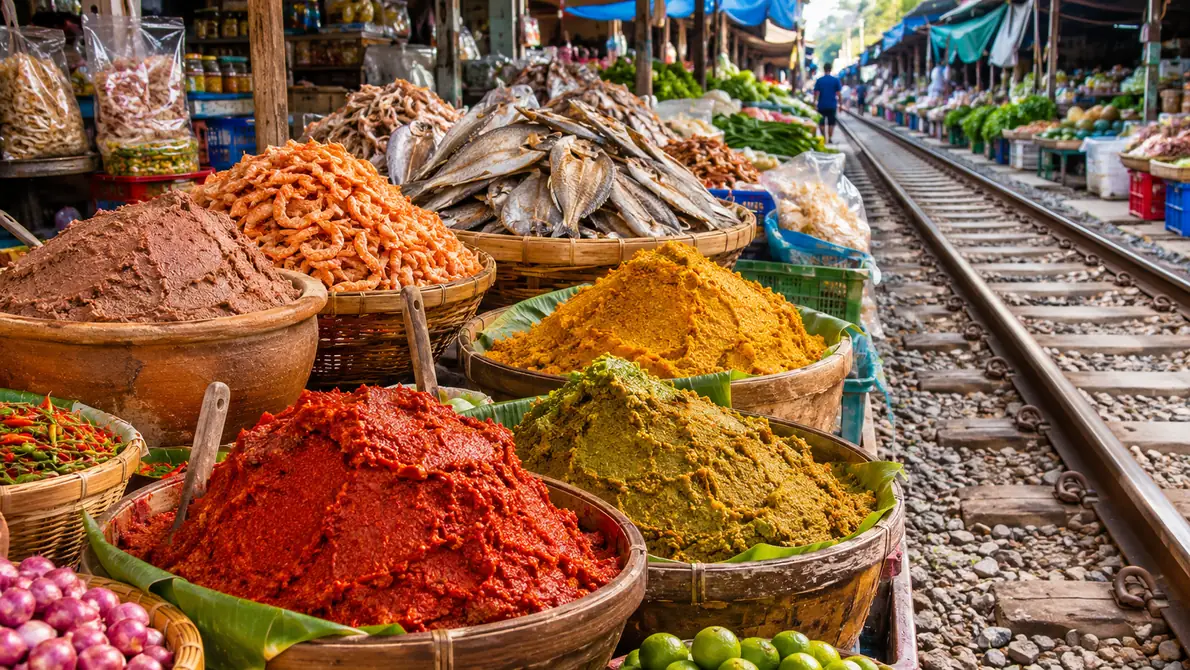
The listings agree on the basics: comfortable shoes, a sun hat, sunglasses and sunscreen, with insect repellent for the Amphawa evening and the canals. The market lanes are covered by awnings, but the floating market boats are not, and the van stops are in full sun.
- Shoes: closed or sturdy sandals. You will step over rails and past wet seafood stalls.
- Bag: small and worn in front. The boat tour and the Khao San departure do not allow luggage or large bags.
- Temple days: long trousers or a skirt below the knee, sleeves over the shoulders. See the next sections.
Going between November and February? The blog covers that season in the cool-season guide.
What food should you try at Maeklong and the floating markets?
At Mae Klong, the local short-bodied mackerel, pla tu Mae Klong. At Damnoen Saduak, boat noodles in small bowls. At Amphawa, seafood grilled on the boats and coconut desserts.
- Pla tu Mae Klong. A short-bodied mackerel caught in the brackish water at the mouth of the Mae Klong river. The Bangkok Post reports it has held a geographical indication since 2021, and calls it softer, sweeter and fattier than deep-sea mackerel. In town it is usually fried and served with rice, chilli paste and vegetables.
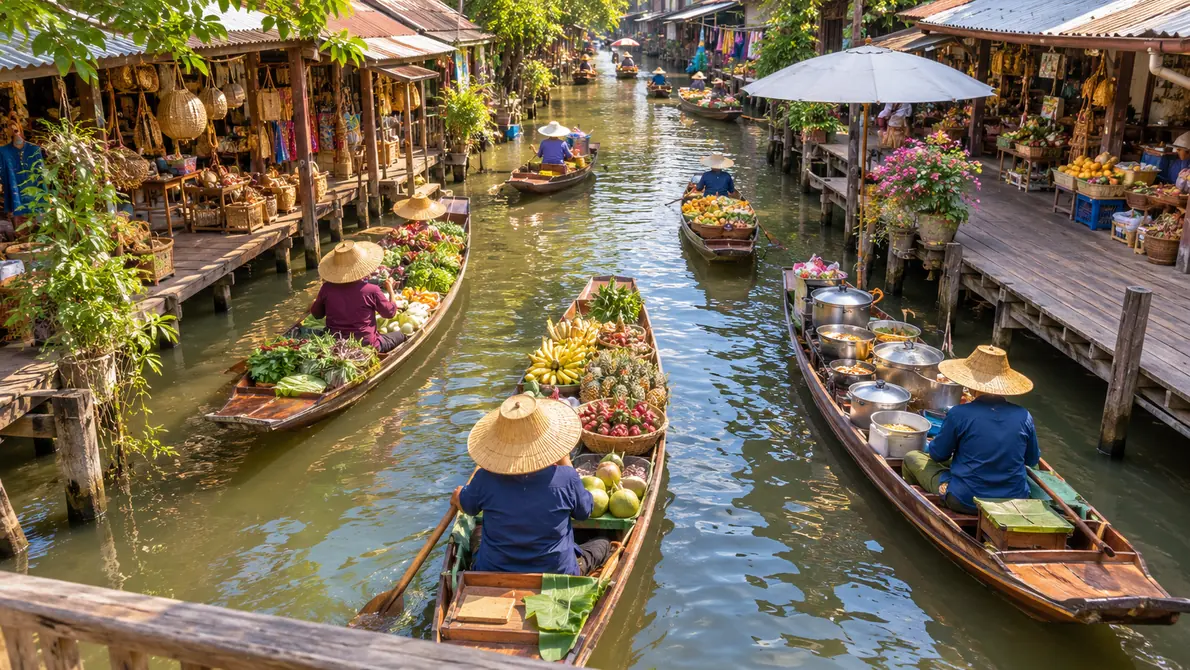
- Boat noodles. Kuaitiao ruea, a dark, rich noodle soup of pork and beef first sold from boats on Bangkok's canals, Wikipedia says. At Damnoen Saduak the canoe cooks still make it on the water.
- Amphawa seafood. Shrimp and shellfish cooked on the boats and handed up to the bank, mostly around midday, per the TAT Newsroom, then barbecue along the canal in the evening.
- Coconut desserts. Coconut custard squares and coconut milk ice cream at Amphawa, made with local coconuts. Samut Songkhram still makes coconut sugar the traditional way, Tourism Thailand notes.
- Fruit. Whatever is in season at the stalls, cut and bagged to eat as you walk.
None of the tours includes meals, so this is your lunch budget. Eat at the floating market and snack at the railway market.
Lunch on the canal: the boat tour gives you free time at Damnoen Saduak after the longtail ride.
Check dates for the boat tourWhat is the dress code at Wat Bang Kung and the temples nearby?
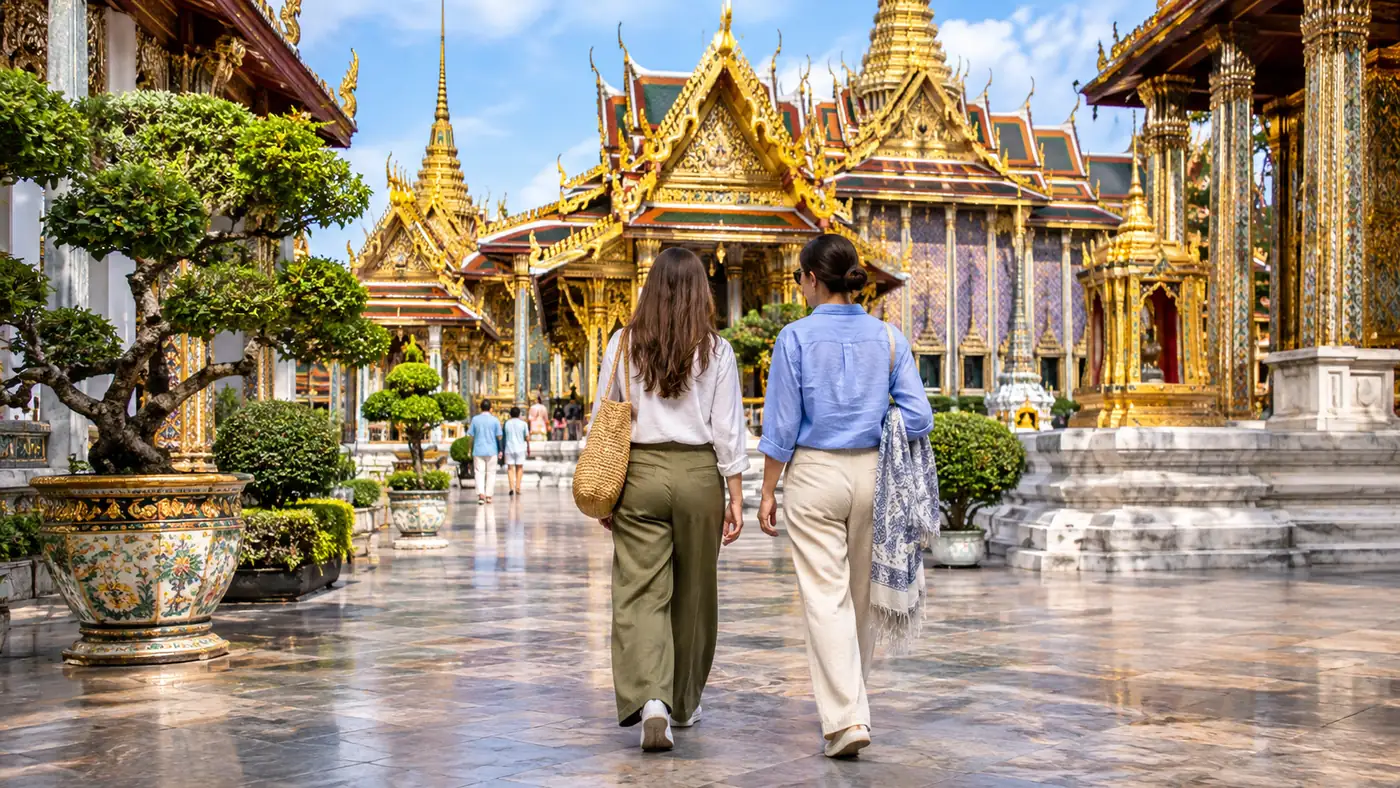
Shoulders and knees covered, and on the Amphawa tour, underarms and back too. Take your shoes off before entering temple buildings. Carry a sarong, scarf or light sweater.
Two of our tours visit a temple. The Amphawa day trip stops at Wat Bang Kung, and its listing says clothes that show the shoulders, underarms, back and knees are not allowed at some sites, and that the rule may be strictly applied. It suggests bringing a sarong, scarf or sweater to cover up.
The Grand Palace day ends at Wat Phra Kaew, a national shrine, where the listing asks for no bare shoulders or knees, no sleeveless shirts or shorts, and shoes off inside the temple buildings. Long pants are on its packing list.
The easy fix is a pair of light long trousers and a T-shirt with sleeves. You will be just as comfortable at the market, and you will not have to change.
Is Wat Bang Kung worth the stop?
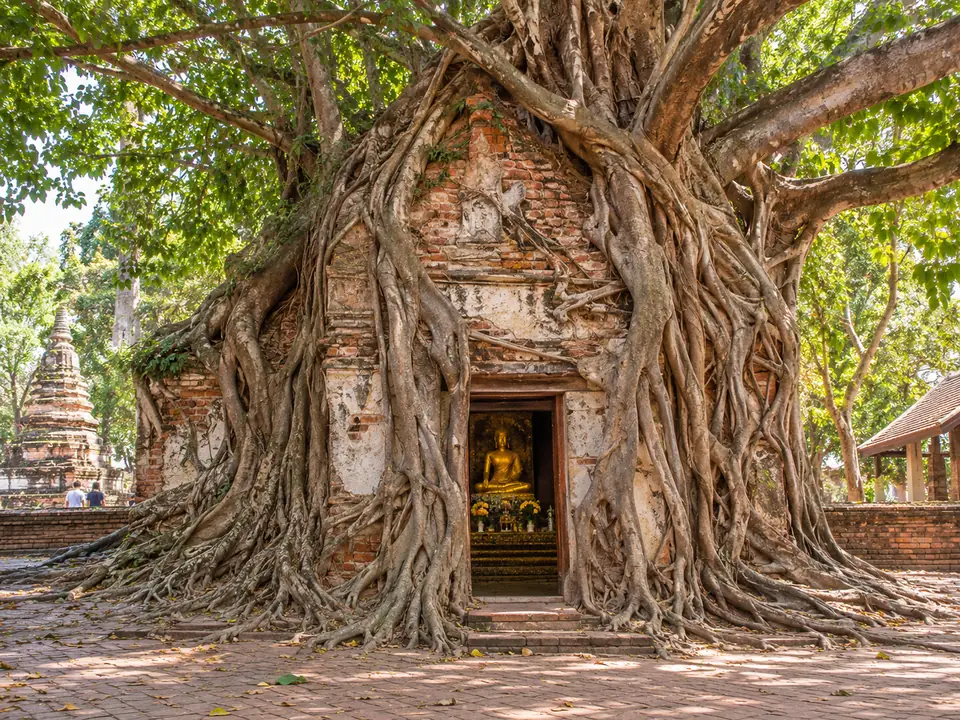
Yes. It is a small Ayutthaya-period temple wrapped in banyan roots, and the Amphawa day trip gives it about an hour. It is the quietest hour of the day.
Wat Bang Kung is in Bang Khonthi district, Samut Songkhram. Its ordination hall is held in the roots of a banyan tree, which the TAT Newsroom describes as binding and squeezing the building. Inside are old murals and a large Buddha image. The grounds are full of life-sized statues of Muay Thai fighters.
The history is military. Per Wikipedia, the temple was walled as a camp in 1765, then held by Chinese settlers under King Taksin, and in 1768 it was the site of the Battle of Bang Kung against the Burmese. Tourism Thailand lists the site as Bang Kung Camp. The Fine Arts Department registered it as a national archaeological site in 1996.
The temple is on the Amphawa day trip, between the railway market and Amphawa. On the morning tours it is not on the route.
The railway market, an hour at Wat Bang Kung, then Amphawa and a firefly boat. Friday to Sunday.
Explore the Amphawa day trip Tour detailsFrequently asked questions
How many times a day does the train pass through Maeklong market?
Eight: four arrivals (08:30, 11:10, 14:30, 17:40) and four departures (06:20, 09:00, 11:30, 15:30), per the State Railway of Thailand. Times can change, so check at the station or call the SRT hotline, 1690.
Is there an entrance fee for Maeklong Railway Market?
No. The market is free to walk through. You pay for what you buy, and on a tour for the transport, guide and boat.
Can you pay by card at Maeklong Railway Market?
Sometimes, but one tour operator notes that most vendors add a 5% card fee. Bring small baht notes.
Do I need to cover up for Maeklong Railway Market?
Not for the market itself, but wear covered shoulders and knees if your tour visits Wat Bang Kung or the Grand Palace.
Ready to book
Choose your Maeklong tour
Free cancellation up to 24 hours before on every option. Prices are from-prices in USD and move with the season.
Maeklong and Floating Market Small Group
- Return transport from Bangkok
- English-speaking guide
- Paddle boat at the floating market
Floating Market and Train Market Experience
- Return transport from Bangkok
- Train ride into the market
- Longtail boat to Damnoen Saduak
Maeklong Railway and Amphawa Floating Market
The afternoon version: the train, the banyan temple, Amphawa and a firefly boat at dusk.