Booking choice: The small-group tour, from $24 per person. Check dates Tour details
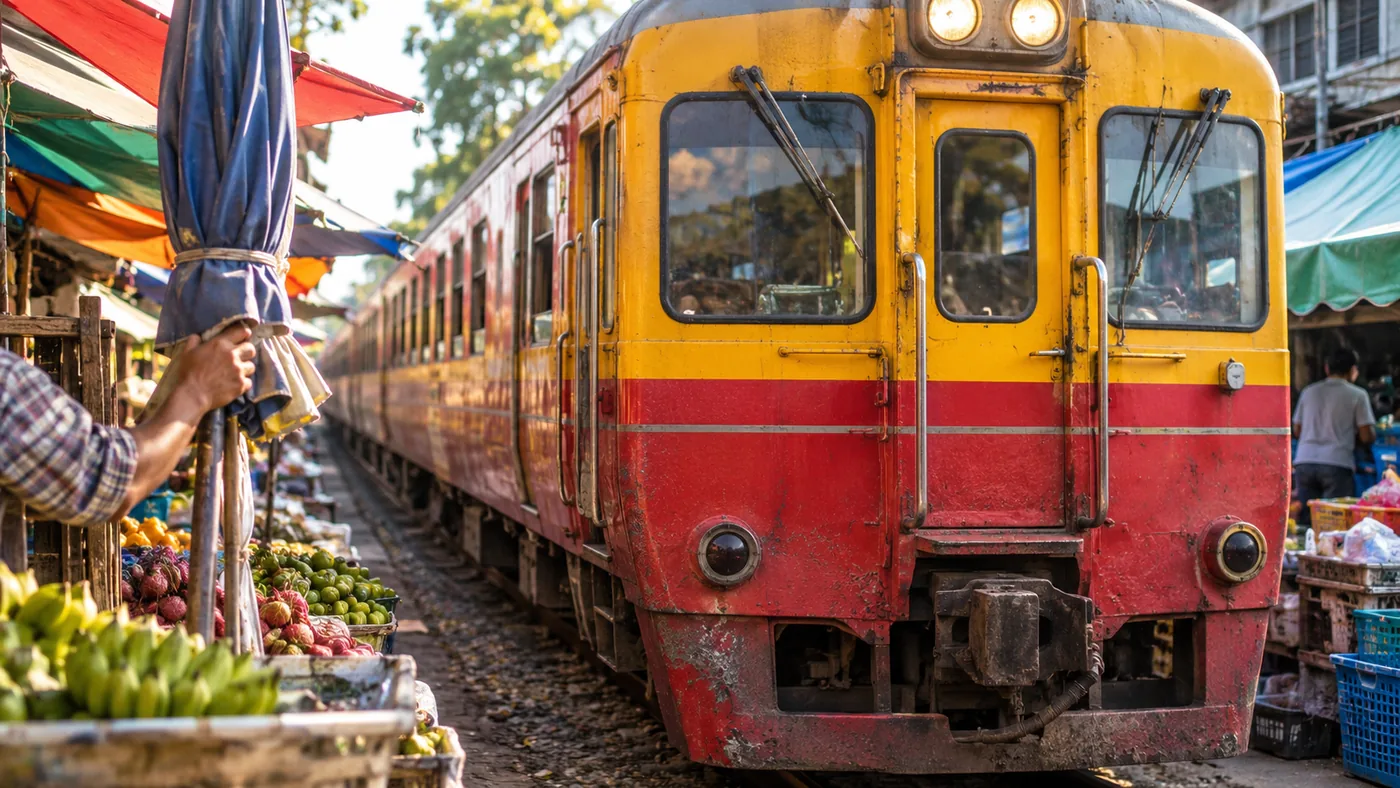
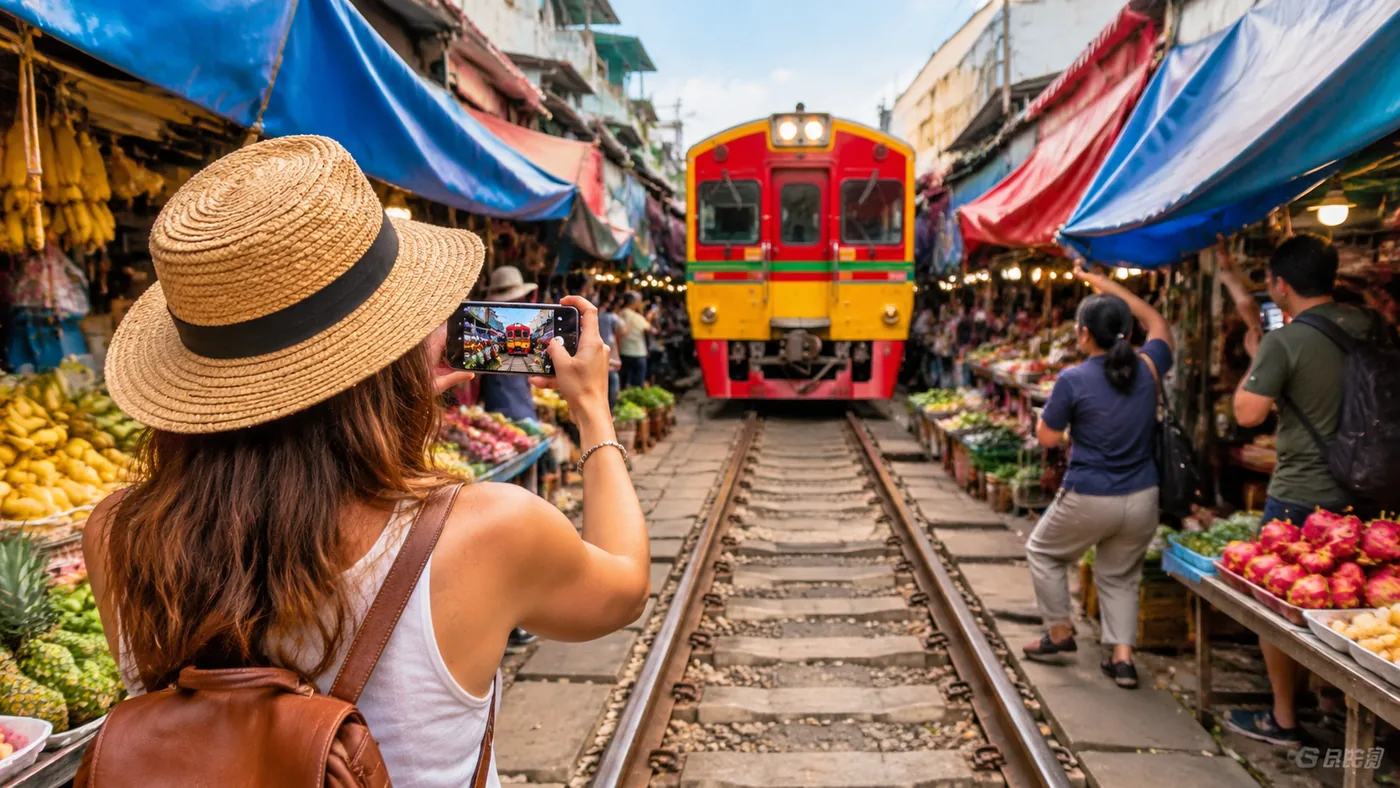
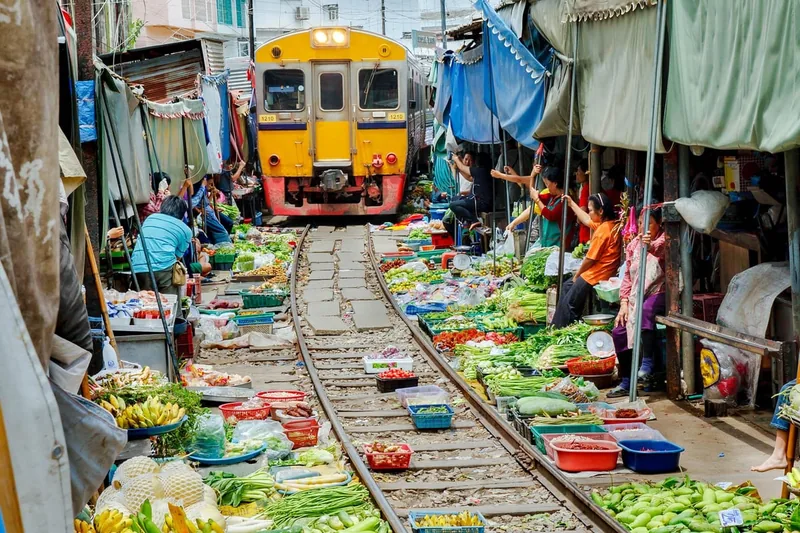
Maeklong Railway Market is two things at once. It is one of Thailand's largest fresh seafood markets, built along the track in front of Mae Klong station (Wikipedia). And for a few minutes, eight times a day, it turns into the scene tour vans drive from Bangkok for, as vendors fold their awnings and a railcar squeezes through.
Whether that is worth a morning out of Bangkok depends on how you go and when. Below is the honest version: the crowds, the touristy part and the real part, what to eat, how much time you need, and the people who get the most from it.
The quick answer
Worth it for most first-time visitors, as part of a morning that adds a floating market. Time it for a train pass, plan about an hour at the market, bring cash, and eat something local such as grilled river prawns or Mae Klong mackerel.
Is the Maeklong Railway Market worth it?
Yes, for most visitors, as long as you are there for a train pass and pair it with something else. On its own it is a long drive for a few minutes of drama; as half of a morning it is one of the best day trips from Bangkok.
The numbers explain why it works. The flagship tour has 4.9 from 13,016 reviews, and the small-group tour 4.6 from 29,625 reviews. People do not rate a market that highly for the produce. They rate the moment the awnings go up, the slow push of the railcar, and the speed with which everything slides back once it has passed.
It goes wrong in only two ways: arriving between trains, or arriving with every other group on the same train and seeing mostly phones. Both are fixable, as the next sections show.
What is Maeklong Railway Market really like?
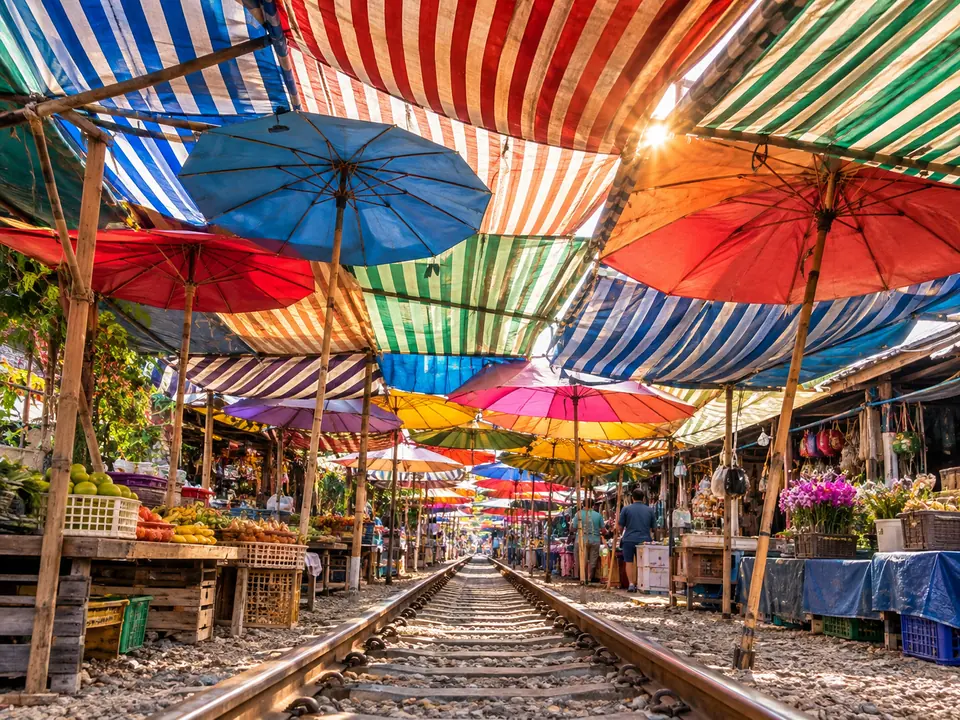
Between trains it is a narrow, covered fresh market with the rails underfoot. When a train is due it becomes a crush of visitors pressed against the stalls for a few minutes, then it goes back to selling fish.
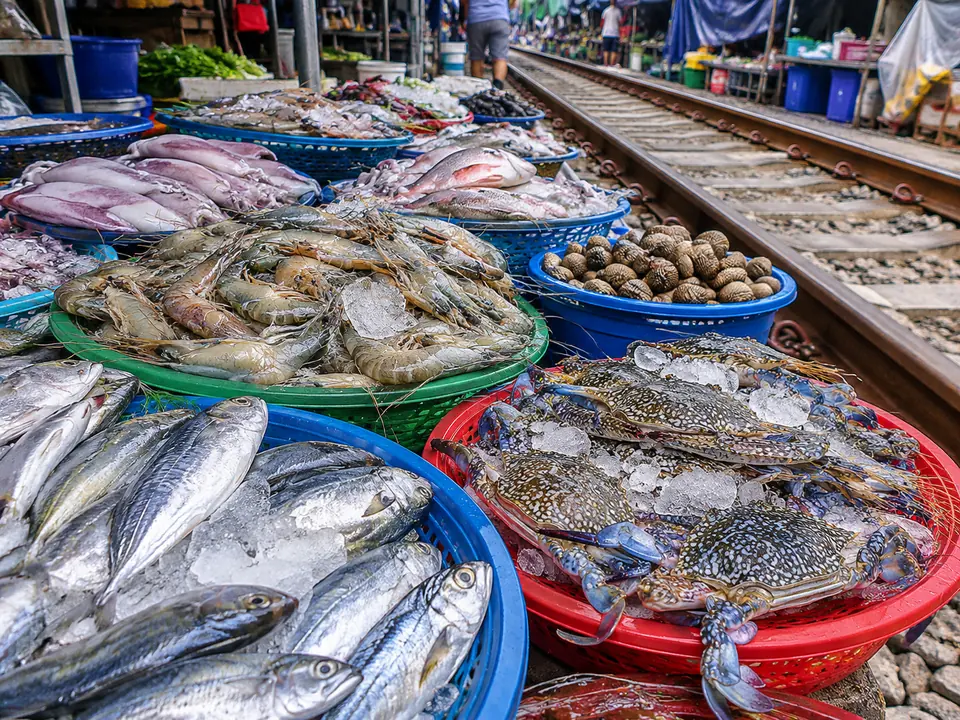
Expect a long corridor of stalls under low awnings, ice and fish on one side, fruit and dried goods on the other, the track running down the middle. Around the fish stalls the floor can be wet, and it smells like the working market it is. Some stalls along the way sell souvenirs, but most sell what people in Mae Klong cook with.
The local name tells you what to watch for. Talat Rom Hup means "umbrella pulldown market" (Wikipedia), after the awnings that fold up for every train. The line itself came first: it opened in 1905 to carry fish from the ports at Samut Sakhon and Samut Songkhram to Bangkok, and the market grew along the rails. Nobody staged it for visitors, which is a big part of why it still feels real between trains.
★★★★★The boat and train markets were quite an experience. I enjoyed using both transportation options to access the markets. The train market is the more affordable option for shopping.
Is Maeklong Railway Market too touristy?
At train time, yes. The rest of the time it is a real local market, and that contrast is the best reason to stay longer than the pass itself.
Even the operators say so. The flagship listing opens with "Yes, these markets are popular and therefore touristy," and the private tour calls both stops very touristy. Guests on the flagship tour mention crowds when several groups arrive on the same train. A few ways round it:
- Go for the 08:30 arrival, before most day tours reach Mae Klong.
- Ride in on the train: from the carriage you see the market with no crowd in front of you.
- Stay through a gap between trains and the tourist side mostly disappears.
- Pick the 14:30 and 15:30 pair with a private car, when the morning groups have moved on.
★★★★★Note that it's a very touristy tour, with lots of people at both the train market and the floating market. However, it's worth the experience for a first visit to Bangkok.
A small group of 12, a paddle boat at Damnoen Saduak, and early departures back in Bangkok by lunchtime.
Check dates for the small-group tourWhat should you eat at Maeklong Railway Market?
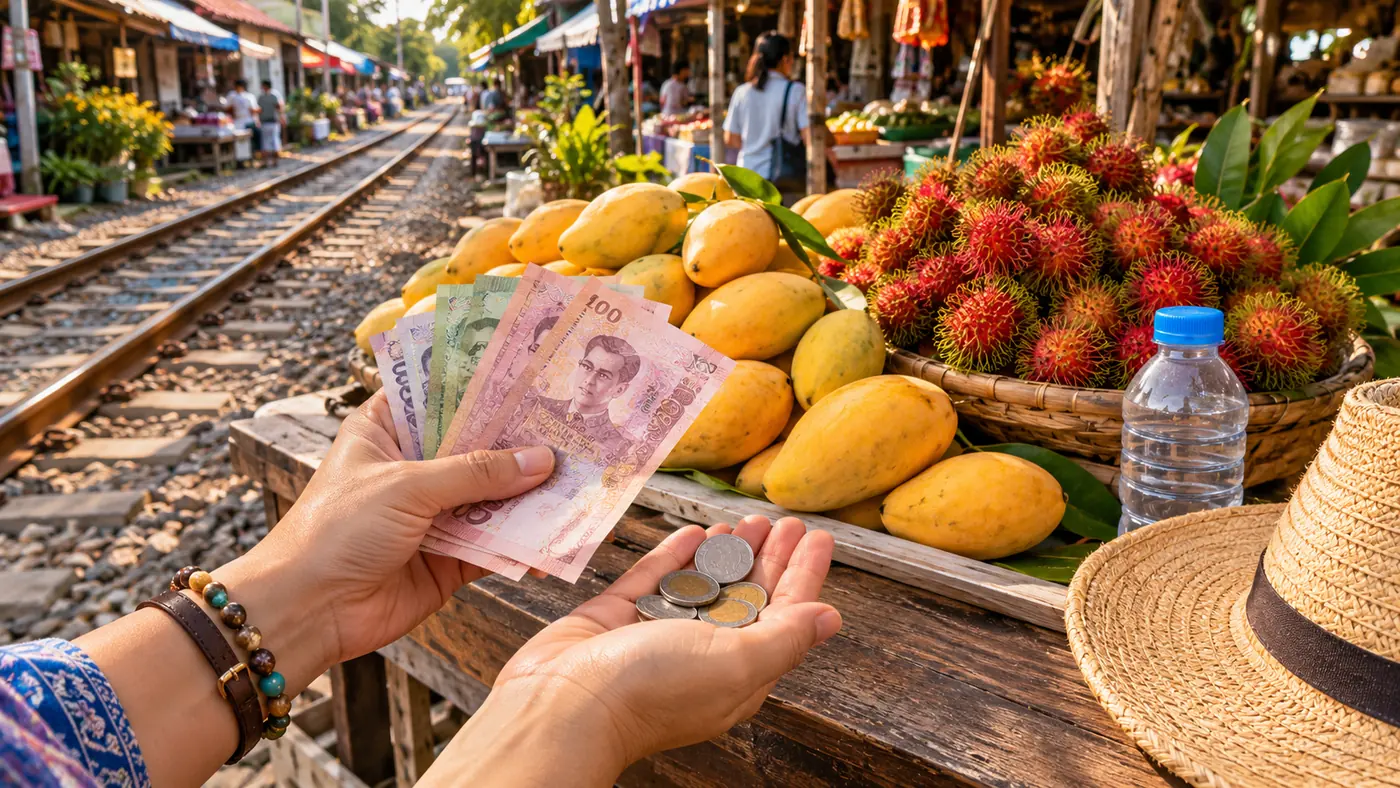
Start with the local fish: pla thu Mae Klong, the short-bodied mackerel the town is known for. Then grilled river prawns or squid, a crispy oyster omelet, and mango sticky rice or fresh fruit to finish.
The Bangkok Post describes pla thu Mae Klong as caught in the brackish water at the mouth of the Mae Klong River, with softer, sweeter meat than deep-sea mackerel, and notes it has held a geographical indication since 2021. Thailand Magazine's list for the market adds grilled river prawns, hoy tod (crispy oyster omelet), khanom mo kaeng (Thai custard) and mango sticky rice.
Bring small notes. One tour operator says most vendors add 5% for card payments, and Thaiger reports that most stalls do not take cards at all.
What can you buy at Maeklong Railway Market?
Mostly food: fresh and dried seafood, fruit, curry pastes, sweets and snacks. A smaller share of stalls sell clothes, bags and souvenirs, and those are the ones where bargaining is expected.
Raw seafood is hard to carry back to a Bangkok hotel, so most visitors buy fruit to eat on the spot, dried snacks and sweets that travel, and maybe a curry paste. Thailand Magazine suggests opening at 70 to 80% of the asking price on souvenirs, never on food.
The Maeklong tips guide goes deeper on cash, what to wear and the shrimp paste stalls by the rail.
How long do you need at Maeklong Railway Market?
About an hour covers one train pass and a walk through the stalls. Two hours lets you see a train arrive and leave, eat, and walk the whole market without rushing.
Most tours give you about an hour, which is enough if they get you there 15 minutes before a pass. The private car gives you about two. On your own, the SRT timetable sets the pace: the 11:10 arrival and 11:30 departure fit in under an hour, while the 14:30 and 15:30 pair needs at least 90 minutes. Full times are in the train times guide.
| Option | Time at the market | Train pass | From |
|---|---|---|---|
| Small-group tour | About 1 hour | Watch the train pass, then a paddle boat | $24 |
| Train market experience | About 1 hour | Ride the train in, about 1 hour at the market | $23 |
| Amphawa day trip | About 1.5 hours | See the train pass, about 1.5 hours at the market | $44 |
| Private car | About 2 hours | You pick the train, about 2 hours at the market | $83 per group |
| On your own | As long as you like | Any of the 8 passes | Free entry |
Who will love Maeklong Railway Market most?
Photographers, first-time visitors to Thailand, families with older kids and anyone who likes food markets. Travelers who dislike crowds should pick an early train or a private option.
- First trip to Thailand: book a combined tour with the train and Damnoen Saduak. It is the efficient way to see both.
- Photographers: ride in on a ride-in tour, then shoot the departure from a stall line.
- Families: fine with a firm hand at train time. Kids love it, and the pass is short.
- Crowd-averse: a private tour with your own guide, or the car and the 08:30 train.
- Weekend visitors: the Amphawa day trip (Friday to Sunday only) adds Wat Bang Kung, the evening market and a firefly boat.
- Limited mobility: the market is narrow and wet, and the main tours note they do not suit wheelchair users. The car is the gentlest version.
Is it worth combining Maeklong with a floating market?
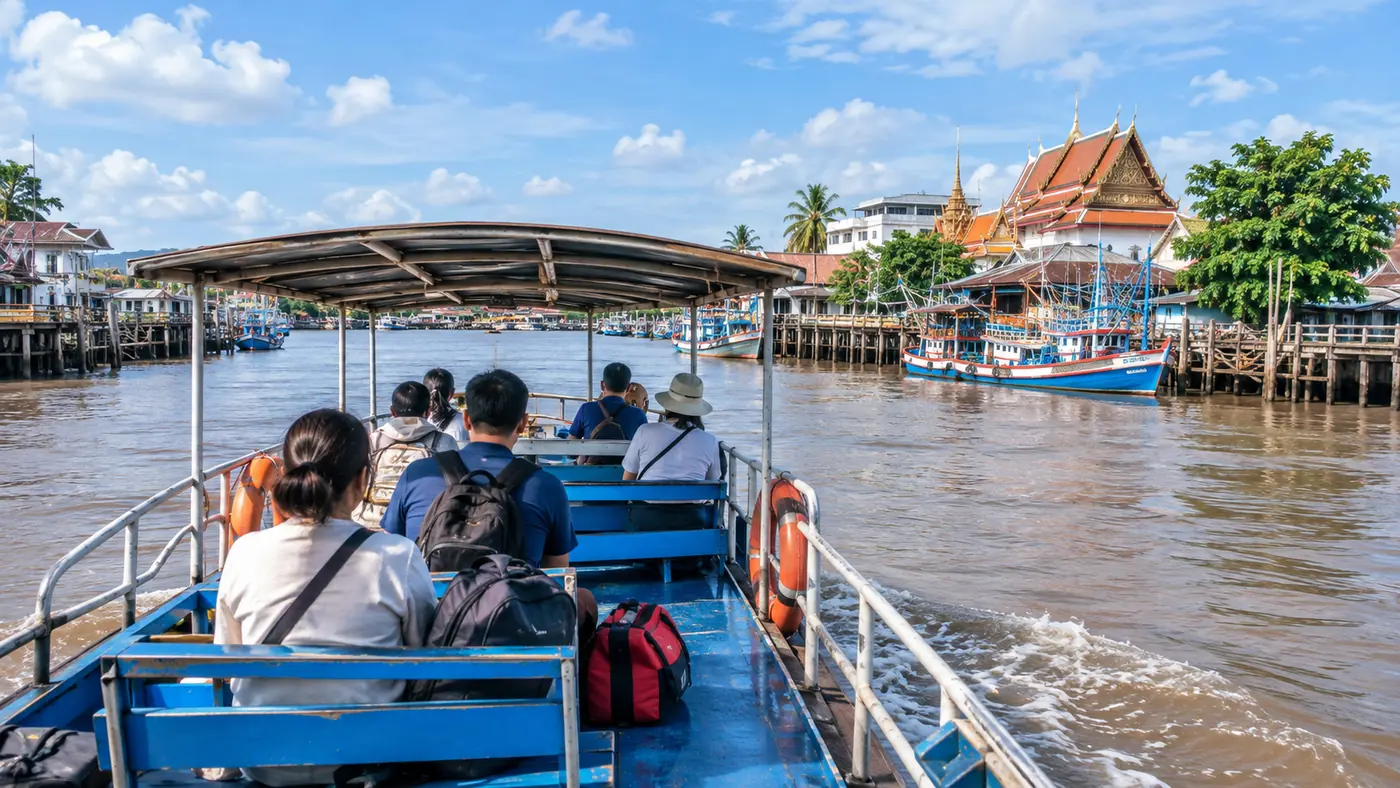
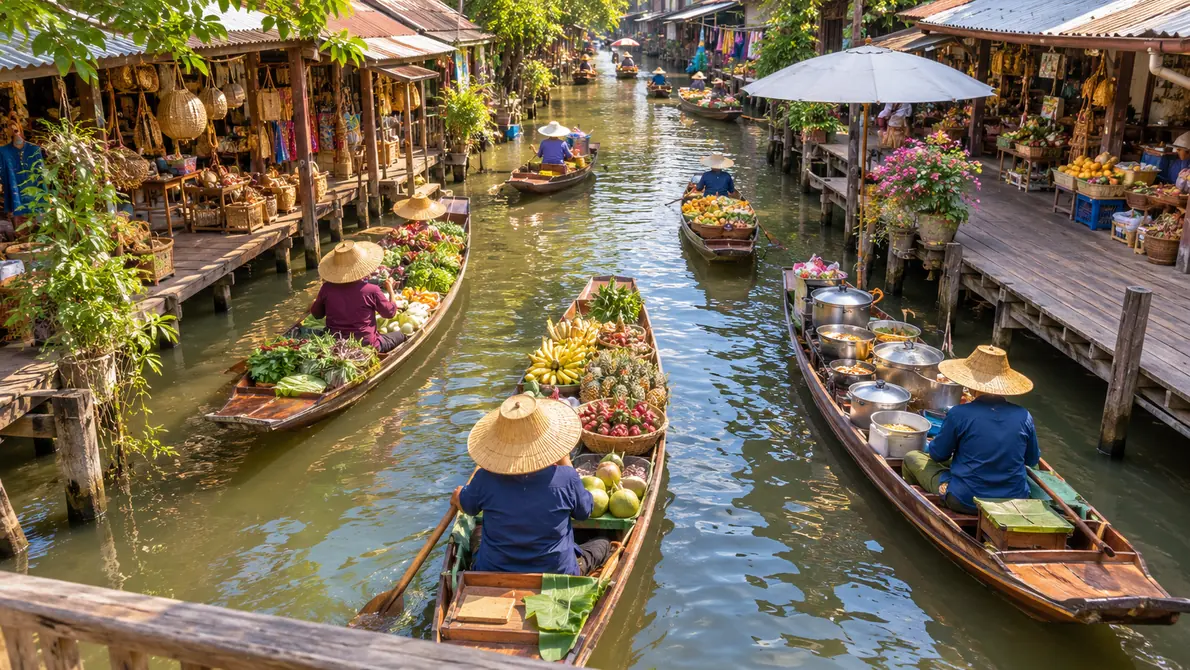
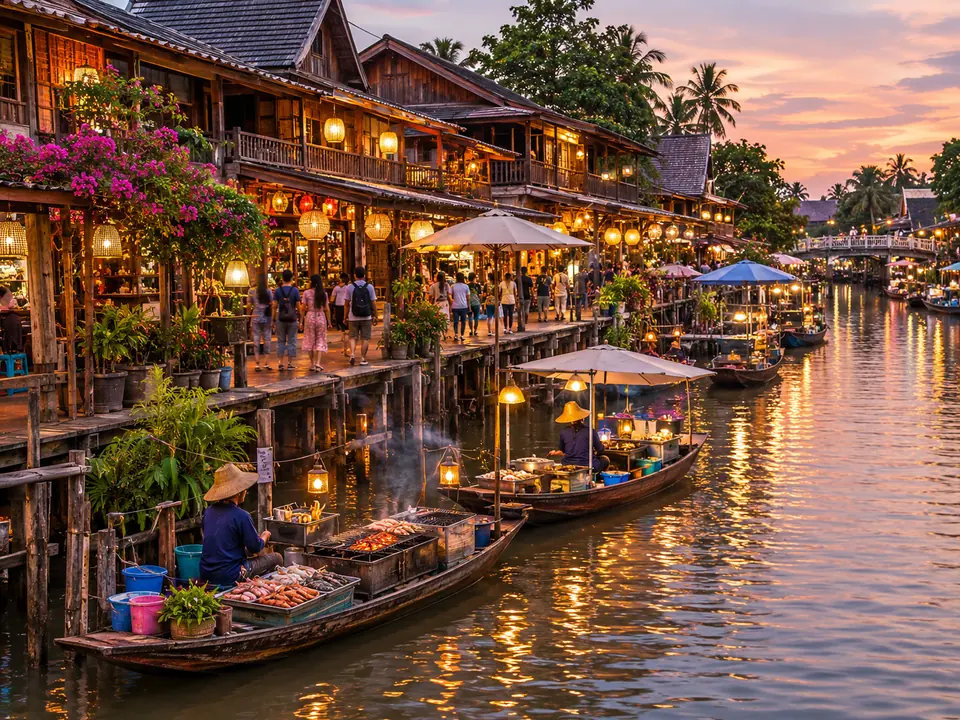
Yes. On the flagship listing it is a 20-minute transfer to the pier and a 45-minute longtail ride to Damnoen Saduak, and that boat ride makes the day. On a weekend, Amphawa is the calmer evening alternative.
Damnoen Saduak is busy and touristy, and its busiest stretch is early morning, which is why tours tend to go there first and catch a train afterwards, or the reverse when the trains suggest it. The longtail ride through the canals is the highlight. Amphawa runs Friday to Sunday and comes alive from mid-afternoon into the evening. The Damnoen Saduak vs Amphawa guide compares them properly.
Close by the station, Wat Phet Samut Worawihan houses Luang Por Ban Laem, one of the most revered Buddha images in the province (Wikipedia). If you have time between trains, it is a quiet contrast to the market.
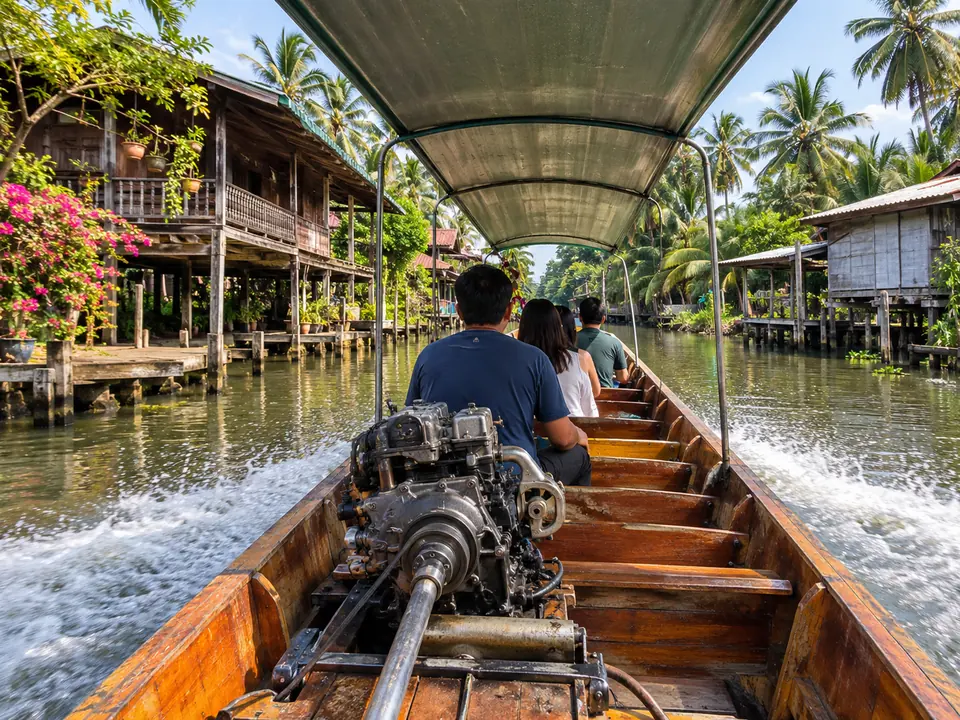
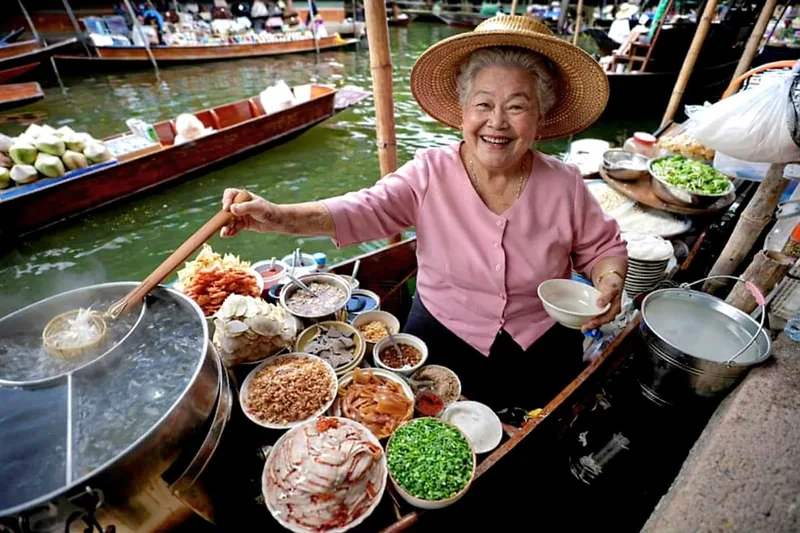
The original Maeklong and floating market tour, now in a small group of 12, with a paddle boat at Damnoen Saduak and early options back in Bangkok around 13:30.
Explore the small-group tour Tour detailsFrequently asked questions
Is Maeklong Railway Market free to visit?
Yes. There is no ticket or entrance fee for the market or the track. You pay for what you buy, the train if you ride it, and your tour or transport.
Is Maeklong Railway Market safe?
Yes, if you follow the vendors' lead. The train moves at little more than walking pace, but it clears the stalls by centimeters. Stand behind the stall line, keep bags in front of you and stay off the rails until it has fully passed.
Is Maeklong Railway Market open every day?
Yes. Third-party guides put market hours at about 07:00 to 16:00 daily, and the State Railway of Thailand timetable lists the same eight train passes for every day.
Is Maeklong or Damnoen Saduak better if I only have time for one?
Maeklong, if the train is what drew you, because nothing else looks like it. Damnoen Saduak if you want time on the water. Most tours do both in one morning, which removes the choice.
Ready to book
Choose your Maeklong tour
Free cancellation up to 24 hours before on every option. Prices are from-prices in USD and move with the season.
Maeklong and Floating Market Small Group
- Return transport from Bangkok
- English-speaking guide
- Paddle boat at the floating market
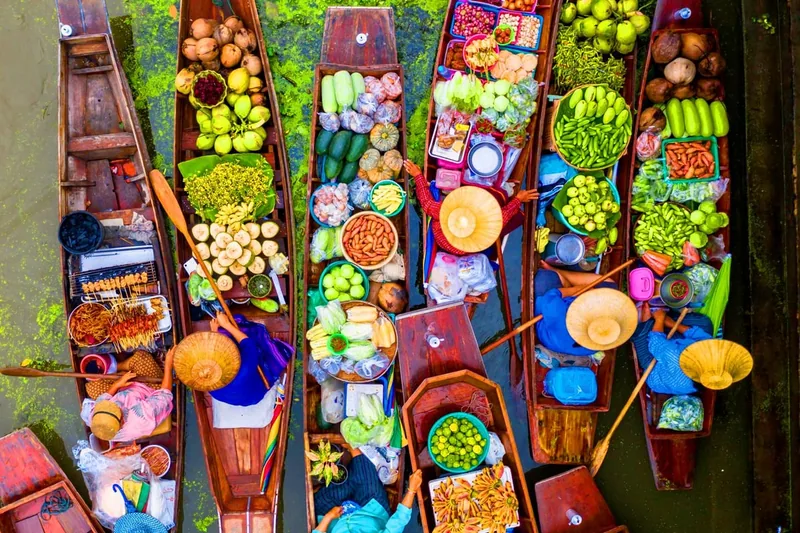
Floating Market and Train Market Experience
- Return transport from Bangkok
- Train ride into the market
- Longtail boat to Damnoen Saduak
Maeklong Railway and Amphawa Floating Market
The afternoon version: the train, the banyan temple, Amphawa and a firefly boat at dusk.